Sunset in Coron

Sunset in Coron
Coron, Palawan

Sunday, March 15, 2015

FEBRUARY 25TH

The Kalayaan Hall of the Malacanang Palace
The celebration of People Power every 25th day of February is beginning to lose its significance on the younger generation. Is it because we, the generation that lived through the Marcos regime, have dwindled in number and interest in it after a succession of mediocre presidents? Or is it because the experience of living under Martial Law is lost on the youth who were never even conceived at that point in our history?

Lunch at the Metropolitan Museum hosted by Bangko Sentral ng Pilipinas  
Either way, it is exciting for us Mabuhay Guides to be involved in a "balik-bayani" (returning heroes) tour for the 3rd Conference of the Filipino Diaspora which was conducted on that very same day to commemorate our renewed independence from the Marcos dictatorship  29 years ago. Participants to the Balik-bayani tour were overseas Filipino workers who have returned to Manila after self-imposed exile in different countries all over the world. All seven jeepneys had at least 20-30 participants. A lot of them left the Philippines to seek protection from other governments or to establish a base from which to launch a mechanism to counter the abuses of the Martial Law regime of many years ago.

Me with Chef Laudico
The pick-up point was at the historic Manila Hotel.  The first stop was supposed to be at the Malacanang Museum. However, because of the volume of participants we were asked to delay the tour of the palace until 11 a.m.  We had to make a short stop at the San Miguel Pro Cathedral within the periphery of the presidential palace.  It was quite a stretch as the museum staff had to accommodate earlier tour groups that packed the museum. 


Menu Card of lunch served by Chef Laudico's 

After a winding tour of the Kalayaan hall and museum we had to gather all the participants and proceeded to the Metropolitan Museum of the Bangko Sentral ng Pilipinas complex. The main focus of this part of the tour was the gold collection of the museum and the works of the 17th and 18th century masters on display at the Met. 

fish fillet on a bed of pasta with malunggay pesto
After the short tour, the guest were treated to a sumptuous lunch by renowned husband and wife chefs Roland and Jackie Laudico. By two p.m., guests were led to their assigned jeepneys and given a brief tour of the National Museum and then back to the Manila Hotel. It was interesting to see how the guests observed the many changes that Manila has undergone after 29 years. Some participants had not been back in the country since they left. Some, who had entrenched themselves as upstanding citizens of their adoptive countries, have managed to make yearly visits if only to touch base with their native land that seemed to be choking under the Marcos regime. 


For those of us who have stayed behind and surived... the more things change, the more they stay the same...

Wednesday, March 4, 2015

ASH WEDNESDAY IN BINONDO


This year's Ash Wednesday and Chinese New Year are a day apart. And so, as I had accepted a Binondo Tour for students of Assumption College, I expected a day of merriment and confusion as residents of the area were in the thick of preparations for the beginning of Lent and a rousing start to the Chinese Lunar year of the wooden goat.


My dear friend, Anne Vera now teaches Cross Cultural Communications at the Assumption in San Lorenzo Village, Makati. I gladly accepted the tour assignment since it would mean the opportunity to be right in the center of all the action on an ash Wednesday and the eve of chinese New Year.


There were four Mabuhay Guides on the first day of the tour (this was a Tuesday): Lovely Reynoso, Jeff Velasco, Ronnie Gador and myself. The next day's tour had Yael fernandez, Ronnie Gador and myself leading the students divided into three groups. 


We did our usual Binondo route with the girls in tow and we enjoyed the company of Anne's students. They were all willing to learn and intently listened to commentaries of the Mabuhay Guides along the way. Such well-behaved girls! Naturally, our commentaries centered on the mixed influences of the Filipinos, Filipino-Chinese in the area. After all, Binondo is a microcosm of the mixture of culture, traditions, norms, mores, economy, architecture, and religion of the common tao living within its 66.11 hectare boundary.


By noon (on both days), everyone had converged at President's for a sumptuous lunch that had the girls and the guides eating their fill... and then for some last minute shopping for fried siopao and more boxes of Tikoy... We jostled our way in and out of the thickening crowd that ignored the heat and humidity of the busy Binondo streets. Some of the students even got media exposure from the networks covering the festivities... Now, that's priceless!


Friday, February 13, 2015

PASSION FOR RESTORATION

Dr. Jaime Laya 
Two weeks ago, I found myself  getting up at 6 a.m. as I had sent in a comment I was attending a group meeting for the e-group Advocates for Heritage Preservation. The meeting was supposedly at 8 a.m. until lunch time at the Escuela Taller (pronounced talyer) Foundation at Intramuros.

some restored pieces on the arches
I got there just as the forum was about to start and listened to a few of the mentors/ board members at the talleres  who were more than willing to give us a background on the noble work that they do at the foundation. My interest in jpining was two-pronged: 1) as a tour guide, I realized early on the importance of preserving our heritage and, 2) I have always been interested in art and culture. So for me, it was a worthwhile endeavor to get involved in something as  worthwhile as this.

members of AHP admiring restored works
Manila is fast becoming a concrete jungle and developers have become to greedy in the sense that gracious old buildings and mansions are  wantonly destroyed in favor of characterless condominiums and high-rises. Think of the DMCI photobomber at thge Rizal Monument and you'll know what I mean. Intramuros which is right smack in the center of all this development, is beginning to get swallowed up in all this construction that if one so much as blinks, we might lose these historic walls forever.

Tito Encarnacion of Advocates for Heritage Preservation
So Escuela Taller was initiated around the 1970's to take care of the many restoration efforts that are needed to bring back the glory of Intramuros. Hey, if Indonesia is exerting so much money and restoration effort to resurrect Batavia (1920's) all the more reason we should love what Intramuros has to offer. After all, it's been around for 450 years!

Technical lecture on restoration work at Malate Church
I am pleased that no less than Dr. Jaime Laya is the chairman of the board of Escuela Taller. If anything, he has the knowledge and the necessary clout to head a foundation that can help preserve Intramuros as a national treasure. At first the government of Spain gave financial and technical support to seed the project. Nowadays, the foundation is trying its best to keep providing  quality training to the youth with less and less dependence on the Spanish government. 
Mrs. Mila Gatbonton of Intramuros Administration giving a lecture at San Agustin

Out of school youth are brought in to the foundation as students where they take up hammer and chisel... or paintbrush  and torch to learn the art of restoring old buildings, frescoes and wrought iron grills and gates that are beginning to decay due to time, the seasons and pollution. These out of school youth are given the necessary training in accordance with TESDA standards and are eventually set out in the world to make a difference in their trade. Depending on their interests, these kids  learn anything and everything from masonry, woodwork, painting restoration, iron work, plumbing and electrical wiring. Tools necessary to make an old, tired building functioning again. In essence, both building and student get a new lease in life, as it were.  

students slaking lime for plastering walls

As we toured the Escuela, we watched as the trainees learn their art, slake the lime for plastering facades,  even fashion their own chisels from iron rods at the  foundry. Some students, we learned have moved on to greater things passing TESDA exams and finding work at actual restoration sites both here and abroad. With all the heritage buildings we have in Manila and the provinces, I wonder if the Escuela Taller can provide enough workers to meet the demand for actual well-trained restorers. It's a pity that centuries old churches are restored with a horrible mash up of influences that destroy both their integrity and their aesthetic value.

Monday, January 26, 2015

SINGAPOREANS AT THE SPA

On a recent assignment to Tagaytay, I had seven ladies from Singapore who had come to visit Manila with a Singaporean lady (Ms Jen) as their tour group leader. Ms Jen is a frequent visitor to Manila, what with her numerous Filipino friends and former supplier to her business of children's wear. These ladies had met in college and have remained friends over the years. They make it a point to travel together as a group and manage to have fun everytime.

view of Taal volcano from the Steakhouse of Tagaytay Highlands .

The day prior to their Tagaytay trip, I had shown them Intramuros and the group ended up with me and the jeepney taking them to the Mall of Asia where they had dinner and was picked up by their friend residing at the Greenbelt residences. Their second day trip was a day of pampering and sightseeing. They were instructed by Ms Jen's friend Mallie to stop at the flower market where she boarded our van and directed the driver to go to the Tagaytay Highlands where they enjoyed the view of the world's smallest active volcano. From there, we drove to Ms Mallie's well-appointed residence in the highlands with a view of Laguna lake.

Fireplace with moosehead and chandelier made of antlers
From there, we motored to Sonya's Garden and were shown around by Ms Sonya's girl Friday. they were brought to the proposal garden, the herb greenhouse and the bed and breakfast, By the time they finished taking photos and chattering away at all the beautiful flowers, it was time for lunch. So we ushered them to the mess hall (so famous for its shabby chic decor) where they feasted on a salad of edible flowers nd greens and pasta and salmon belly.

tossed greens with edible flowers
All through lunch, they were having so much fun, I had to remind them we were going to pamper them all afternoon. With a heavy heart they stood up from the table and proceeded to the van. Our next xtop was Nurture Village Spa where they were to have an afternoon of full body massage or foot massage. Three ladies opted for the foot massage while the rest had a full body treatment.

Nurture Village Spa reception area

I, on the other hand, was free to explore the village. The spa, away from the maddening crowd of Tagaytay, has its own self-contained community. They grow their own greens in a patch behind the mess hall. There are accommodations which one can rent for an overnight stay. A little steep for P!0,000.00/night for two with massage treatment and breakfast and lunch/dinner. But the spa has its own little nooks and crannies where one can totally lose one's self in pampering and relaxation.


There was a spot with a small dipping pool and i spent my time catching a power nap on the outdoor chaize lounge under a  sunshade of bamboo and nipa. they also have an area for team building activities and a play ground for kids. The huts for the footspa are open air with lounges and footstools ready for foot massage. The full body massage is conducted in more closed quarters for privacy just in case the patient doses off in the middle of treatment.

cottages for overnight stay

There are also "ulog" style huts typical of the Cordillera in a small portion of the village called Puro Canyao. These are rooms that can accommodate a small family of five or it may also be converted dormitory style by adding or removing the beds. The massage tables are beneath the huts which makes for a convenient  set-up. the bathrooms are clean and modern and the one hectare property is discreet and quiet. The perfect place for a  quiet retreat.

Ifugao hut with massage beds underneath
After a round of snacks for the ladies it was time to head back to Manila. The traffic was okay, except that by the time we got to Makati, a public utility bus had caught fire and caused a major traffic jam. That marred what would have been a perfect day. Nonetheless, the ladies enjoyed the spa treatment and said they'd come back to Manila after their respective trips abroad. 

Interior of the Ifugao hut

Monday, January 19, 2015

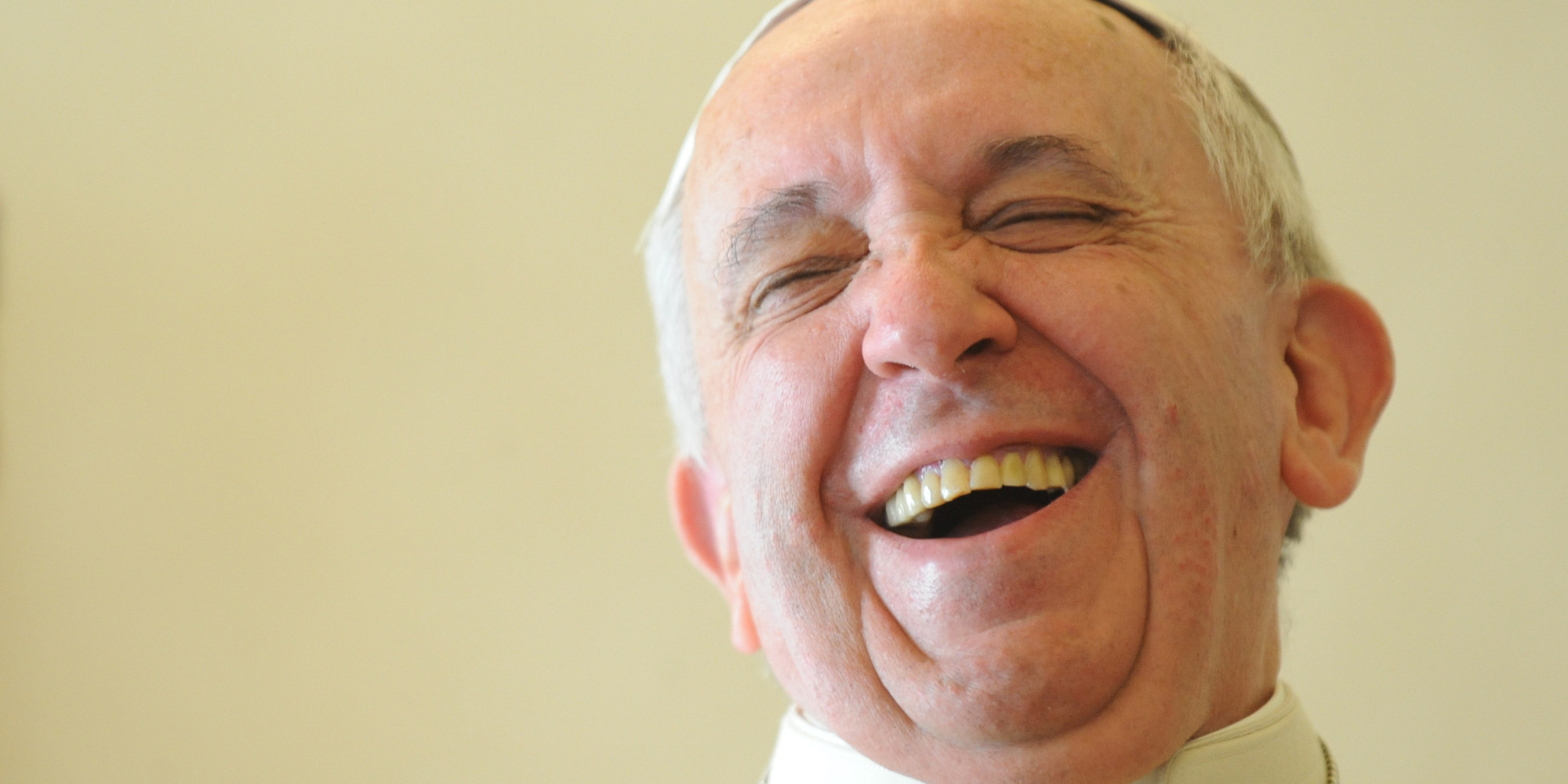
POPE FRANCIS FEVER

Pope Francis

I've been blessed to have seen two popes. Well... three, now...

How infectious is that smile?
*photo from huffingtonpost.com


I happen to live a couple of blocks from the Apostolic Nunciature so, it isn't much of an effort to have a peek at arriving popes that swing by Manila on Pastoral visits. The first pope I saw was Pope Paul VI who came to Manila during the pre-Martial Law days. I was ten years old then so I have no recollection of the dates of this particular Papal visit. What I can recall is that, the pope mobile was non-existent then. He was brought to and from the Papal nuncio in a black limousine (presidential car?) and he stood out on an open sun-roof as he blessed the throngs of people that lined the streets to greet him.


Then came Pope John Paul II. He visited the country twice. 1989 and in 1995. That much I remember since  he came for the canonization of St Lorenzo Ruiz and then the next visit was for the World Youth Day celebrations. During his visit, he set a Guiness world record for the most number of attendees to the celebration of the Mass at the Quirino Grandstand with a whopping five million Filipinos in a single venue at a single particular time. The crowd was so thick the Pope had to be airlifted since the crowd had become unmanageable much to the consternation of the Vatican security. He went around in a bullet-proof encased white pope mobile made by the Sarao jeepney builders.


Pope Paul VI

In both instances, attempts at a papal assassination were thwarted. Thank God! Pope Paul VI's would be killer was a Bolivian painter that disguised himself as a priest. It was allegedly President Marcos who foiled the attempt by dealing the man with a karate chop that sent the knife falling off the killer's hand. The event is in a hand-written diary of President Marcos that's still in the Malacanang Museum. Critics, though, feel the entry would have been highly-unlikely. 


As for St John Paul II's assassination attempt, It was a middle eastern terrorist who had settled at the Josefa Apartments along Quirino Avenue who was arrested. They found a cache of explosives in the room which he was renting aimed at blowing up the would-be saint to smithereens. I can remember during John Paul II's visit, the faithful were allowed to camp out in front of the nunciature all evening. Some of the faithful would gather in groups in prayer and in song. That prompted the pontiff to come out of the balcony a couple of times to bless the crowds and in his surly sense of humor tell the crowd "Go home, I'll sleep now".


So this time, around, security was extremely tight. No more milling around in  Taft Avenue as Pope Francis needed all the rest he can get due to a tightly packed schedule of activities. There were no mobile signals as well. The highlight of his visit was to be a trip to Leyte to commiserate with the victims of Yolanda. Ironically, it was another storm (Amang) that shortened his much awaited visit to the province ravaged by the storm. Nonetheless, the Mass, the motorcade, the luncheon and the visit to Palo were still precious to our dear countrymen.


His Mass at the Quirino Grandstand was replete with a full orchestra, 1000 voice choir, sinulog dancers. For decor, a multitude of the lowly San Francisco potted plants abundant in our shores and an estimated 6-8 million people in attendance some of them bearing images of the Santo Nino . How does that grab you? 


All three popes were different in their disposition and appearance. Pope Paul was Italian and he had a slight frame and large dark eyes. His features were sharp and fine boned owing , I guess, to his Roman roots. He also smiled slightly and looked rather formal as he looked at his flock.  Pope John Paul II was a big burly guy that had a large frame and a heavy set jawline. He was Polish and his demeanor reminded one of a steel worker in one of those sweatshops run by a socialist government. Pope Francis is rounder and more jovial. His smile hits you like a warm knife on cold butter... yeah, he melts your heart. But despite their differences all three men have an air of holiness about them. They have a strong presence that pulls you in without being over-powering. One gets a sense of comfort and security just by looking at them even from a distance. I guess that's the Holy Spirit at work. But whatever it is, you can't just look at their motorcade passing by and forget about them instantly. You can actually feel a palpable presence once you see them reducing you to tears of pure bliss.

Pope Francis celebrating Mass in the midst of a storm in Leyte
*photo from rappler.com

In his four day visit to Manila, I saw him everytime he goes off to a function but I was only able to capture fleeting moments of Pope Francis on video, Forget about taking pictures with a DSLR, The crowd's just too thick and too frenetic to take a clear shot especially during his arrival where we were like packed sardines waiting for the motorcade along Quirino Avenue. I'm fortunate to be strategically located as opposed to those who I've met who came all the way from Binangonan and Tarlac just to see Pope Francis. They had to walk for miles just to get to my neck of the woods due to blocked roads and re-routed traffic.  I can only boast of brief experiences with three popes - one is now a saint! How many have had the opportunity to see a saint in their lifetime? I'm blessed! That should've been enough experience... NOT!


*I would've included my videos, but the upload is  so painstakingly slow...

Monday, January 12, 2015

THE LEGEND LIVES ON

Christmas 2014 at Grace Park restaurant

It's 2015. I would have made a "bid 2014" goodbye entry but I was just so busy with tours and with the Christmas season in full swing, I just haven't got the time... nor the energy to put into words the the gratitude and happiness of a fabulous 2014.


The month of January 2015 started on  a high note. The 31st of January was the scheduled date of my tour with his excellency Ambassador Forner of Norway with his family and guests and so I ushered in the new year with a brilliant tour and was asked to have another one for some of Norway's parliamentarians after the papal visit. Said tour has been confirmed and scheduled for the 23rd of this month.


However, the promise of a fun-filled year was marred by the sudden loss of mentor and dear friend/mother-figure Susan Calo Medina. Now, you know I hate goodbyes...and this one stings even more because it came without warning. Yes, the legendary queen of travel has bade us all goodbye. I won't be ashamed to admit that I shed some tears at the horrible news.

Christmas re-union 2014
I remember some six years ago, as a hopeful applicant to the Mabuhay Guides training program, we were asked to prepare a ten minute audio-visual presentation on the history of money in the Philippines. Out of 250 applicants who took the qualifying examinations, fifty were shortlisted and each one had a panel interview and the presentation to boot.  

monthly meeting with NCCA chairman Felipe Mendoza de Leon
I came on the appointed date excited and ready and dressed to the nines as an "indio". On the panel were Usec, Edu Jarque, Rose Libongco, Usec. Bengzon, DOT Secretary Ace Durano, and representatives from Rajah Travel, Baron Travel, and other hospitality industry bigwigs... and THE Susan Calo-Medina.

Moi, Brian and Ms Susan
I had met her earlier on while chilling out in PowerPlant Mall with Leslie Noble (who had worked with her previously). Leslie introduced me to her and I remember telling her that I was a big fan of hers; to which she responded by smiling coyly and saying "thank you." I thought nothing of it until I saw her again on that dreaded panel interview.

Ms Susan, Mr. Capistrano and moi
After I made my introductions and started my presentation, I asked the panel if I could show them my AVP which I had saved on my laptop. Mrs Medina said never mind as I couldn't go on a tour with a laptop on hand anyway. I was asked if I was not finicky about travelling to the hinterlands and I said that prior to my application, I had already traveled from north to south and east to west in the Philippines and that it was for this reason that I sent in my application. "So you can travel anywhere... dressed in that?" (referring to my OOTD with a raised eyebrow) to which I replied... "why not? it's Filipino!" (and I bit my lip) She seemed to badger me even more by implying I would not be able to please the guests because I looked to uppity... I said..,. "Try me!"That seemed to go on forever... and then my presentation was cut again with her saying..."OK... in summation..." so I gave a final comprehensive statement that got everyone nodding in approval. I got in!

Black Nazarene traslacion
I have now been guiding for more than six years. I still remember that interview vividly in my mind. However, now Mrs. Medina probably knows that I lied... I was in an Armani plaid tunic and my corchos were actually Italian slippers. I did look Filipino, though... "indio-ish" enough to get away with it... Sorry, Madam Susan!!! 

At the wake,L-R Ronnie Gador, Chito Tayag, Yoyet Tungon, myself and Joy Co
I went on the vigil Mass of the Black Nazarene's traslacion at the Quirino Grandstand (8-Jan) and stayed on until daylight for the annual procession. As expected, the jostling for position along the carriage caused a lot of delays: the rope used to pull the carriage broke and the much touted forklift wheel for the andas gave in so by the time the procession passed by our waiting area it was nearly two o'clock in the afternoon.

Capilla de la Virgen, Sanctuario de San Antonio
That's when I checked my phone to see that I had 4 missed calls and a text message that had the news. Susan Calo Medina had taken her ultimate adventure. She  even picked the perfect travel companion on her journey Home... Goodbye, Ms Susan! Your guidance, your love for country and your discipline will live on....

Wednesday, October 29, 2014

BREAKING INTO THE BANK

cowrie shells
I'm not talking about a major crime here... just a little catchy title for a visit to the Bangko Sentral ng Pilipinas. 

knife currency 

Unbeknownst to many Filipinos, the BSP holds the distinction of having two (yes, TWO!) museums within the complex. The more famous one is the Metropolitan Museum which houses priceless works of our masters in the visual arts.

jade coins

Aside from that, Fort San Antonio Abad also lies adjacent to the Met Museum where special events and dinners for the central bank are held. The fort was built by the Spaniards as a look out for pirates and invaders coming in from the Manila Bay. Eventually, the navy erected their headquarters in the area which is now known as the Jose Andrada Naval Station.

crocodile money
The main purpose of my visit, though, was the MONEY MUSEUM, mainly because it was part of the itinerary of Business Management students from the Aklan Catholic College who were in Manila last week.

barter rings
It's not very often visited by tourists. One, because it isn't as high profile as the other well-known museums in the country. And two, because one only visits it for a particular reason that borders on materialism. It deals with the history of money. Anyone who would be interested in how we developed our currency should go visit it.

pre-spanish coin

Anyone knows that people attach a certain value to material things. Ergo, our appreciation of money and what it can buy is a subjective thing. Money is a great indicator of a people's history. It, in a way, is a "billboard" of what makes a country distinct from the rest of the world. It is a microcosm of a people's struggle to create an ideal way of life for its citizens. And so, when you look at a bill, you will find portraits of people who have contributed greatly to society, flora and fauna endemic in a country, historical vignettes that shaped a nation and security features to prevent imitation and falsification.

galleon trade coins

What interests me about the money museum is the evolution of our medium of exchange. It had to progress somehow, somewhere. So from early examples of cowrie shells traded for other goods and services it slowly... over the centuries... became more state of the art. Cowrie shells! Really? It is surprising how the value of it changed over time. Nowadays, it's only good to mark your "bahay" for a game of "sungka". But in pre-colonial times these cowrie shells were even coated with gold for added value.

Spanish coins
The Money Museum has four sections: the pre-colonial, the Spanish colonial period, the American up to WWII, and the contemporary period. Side galleries include Layon which tackles how paper bills and coins are designed and finally minted, the installation art collections of the Central Bank and tucked away in a corner is the foreign currency collection which includes an ancient Roman coin.

galleon trade coins and Spanish medals
It really is worth a visit for those of you who are history buffs. The collection is well-curated and organized and just about anybody who wants to view the collection is welcomed provided they can present valid identification. 

pre-colonial jewelry

tamborin jewelry spanish colonial period