Sunset in Coron

Sunset in Coron
Coron, Palawan

Sunday, June 28, 2015

STAKING OUT STA. ROSA AND BINAN

Sta. Rosa de Lima
I wrote about the Advocates for Heritage Preservation tour of Malolos last month. I've been looking forward to this heritage tour Of Binan and Sta. Rosa, Laguna for weeks. Finally, Saturday, the 27th came along. I was up early so I won't miss the carpool ably arranged by Johnson Bernardo. While waiting for the van, I met a few other AHP members I haven't met before, Fritzie Ramos, Waff Recalde and Tan Ocampo.

Sta. Rosa de Lima Church


And then the van arrived on the dot. We loaded up and sped off towards Sta. Rosa and Binan. Sta' Rosa is approximately 38 km south of Manila. Named after, St. Rose of Lima, the town was elevated to city status covering an area of 54.13km2. Discovered in 1573 by Spanish explorer Juan de Salcedo, the area was annexed to Tabuco, now known as Cabuyao, Laguna. Then it was annexed to Binan and by 1688, it was separated from Binan to be named Barrio Bucol (Bucal?) Then by 15 January 1792, the city of Sta. Rosa was founded. 

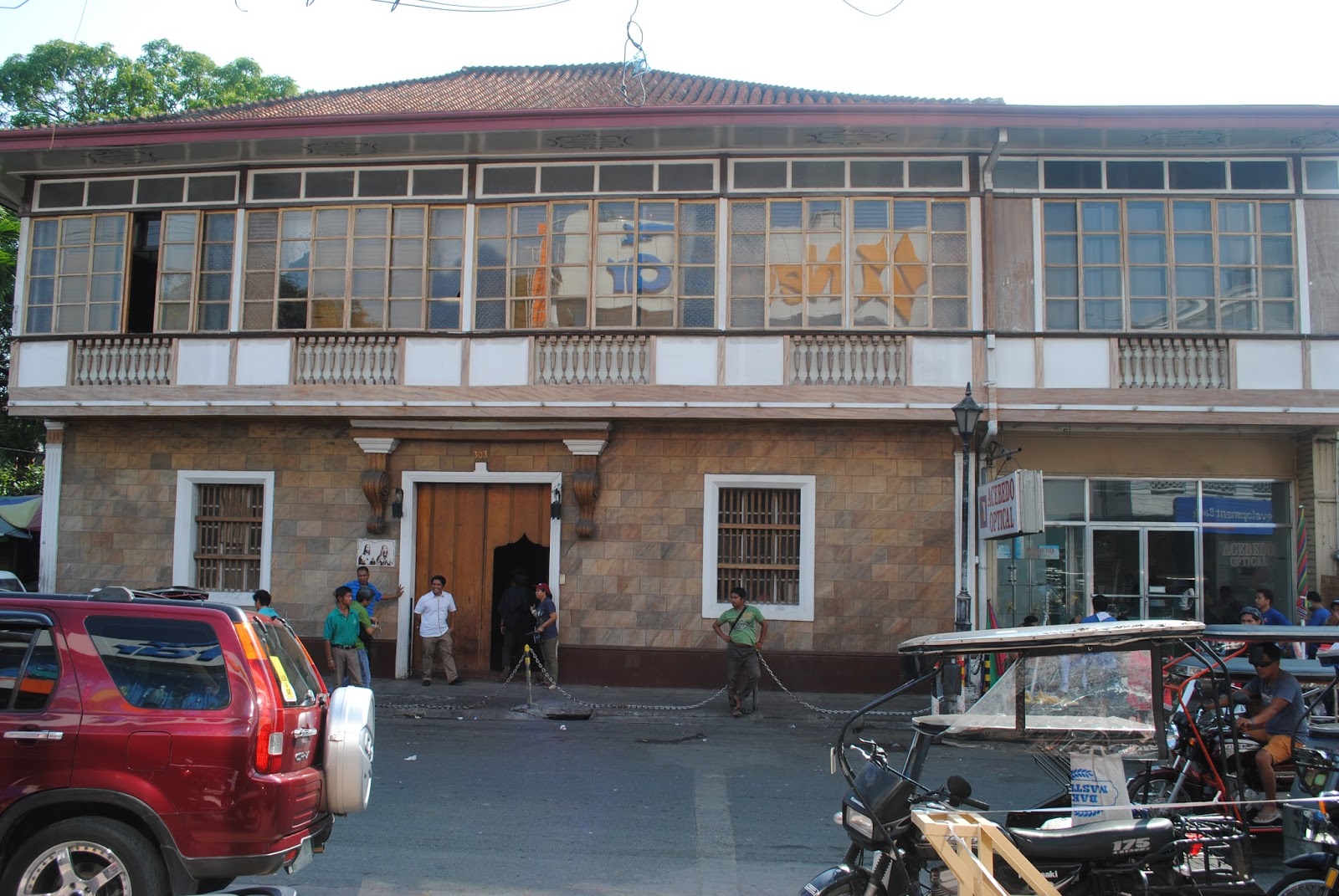
Zavalla house

Formerly an agricultural area, it's rich soil and abundant water was a hot target for Tulisanes (bandits) during harvest time for them to replenish provisions and stock up on supplies for long, lean months of fighting against the guardia civil. Yes, some revolutionaries were branded as merely bandits who were discontented with their lot in life. That's where the short sighted vision of the Spaniards failed them. They didn't realize the discontent would fester into all out revolution. 

Tiongco house

Anyway,  the Jesuits usurped the lands from the local landowners. They gathered the residents into communities and hamlets and the prominent families were given prominent positions in their barrio. Upon expulsion of the Jesuits, the Dominicans took over the management of these friar estates and remained under the control of the friars reaching as far out to the north in San Pedro de Tunasan and as far south west to Silang and Amadeo, Cavite.  

Gonzales house


General Pio del Pilar fought alongside Filipino revolutionaries against the Americans in this area. Its rich history is further enhanced with the city's participation against the Japanese forces. As the American forces were pushing their way to Manila from Tagaytay, the Japanese continued to wreak havoc in areas they retreated to. By 5 February, 1945 the Japanese had abandoned Sta. Rosa. 

Almeda Heritage house


Binan, on the other hand was the richest city in Laguna prior to American occupation. It is approximately 34km southwest of Manila. It was used as a base for Spanish forces to combat the Tulisanes. Eventually, it became a hub for business. Then the area became more popular as an industrial hub when then Governor of MetroManila, Imelda Romualdez Marcos wanted to decongest Manila of factories. Some of them moved to Sta. Rosa and Binan. 

Former munisipyo, then hospital
This visit was made special as the AHP members were allowed access to ancestral homes in Sta. Rosa. We visited three homes The Zavalla, Tiongson and Gonzales homes before we moved on to Binan, Laguna to experience the Almeda and another Gonzales home then visited the Cuarteles.of We got to visit and see for ourselves, the former detention cell occupied successively by three controversial detainees: Nur Misuari, Erap Estrada and Janette Lim-Napoles. That was pretty cool! before the sun went down, the AHP group disbanded and went our merry way.

Cuarteles 


Looking forward to our next heritage tour in Sta. Ana, Manila next month. That's 25, July, 2015! If you're looking for a brilliant way to spend a lazy weekend... you're invited to join the Advocates for Heritage Preservation. Look up the Facebook page headed by Tito Encarnacion. It isn't just a fun way to learn history and culture, it's a cool way to meet new people and embrace your identity as a Filipino.

piitan ni Janette Lim-Napoles, Erap at Misuari


Thursday, June 25, 2015

NYMFA'S WOMEN OF CURIOSITY


I've known Nymfa Maligaya Ursabia for a couple of years. The first time I met her was while she was still in college at the Philippine Women's University finishing her Bachelor of Fine Arts degree. Of course, both she and now husband,  Victor Ursabia were still courting back then. Victor had become an apprentice and moved on to become a company member at ballet Philippines. After a few more years, he had become director of the Ballet Philippines Dance School.

Me with Nymfa Ursabia
Eventually, she and Victor got caught up in making a life together and raising a family. Meanwhile, both have pursued different careers. Nymfa stuck to making art. Her first show was at Whitespace in Pasong Tamo, Makati where she collaborated with other visual artists. That was a success. But you know what they say... you're only as good as your last exhibit...


So this exhibit is special for both artist and patrons. This is Nymfa's first solo exhibit where she showcases her identity as an artist. I asked her what took her so long... the ever soft spoken Nymfa coyly smiles and shrugs her shoulders... She had nothing! Honestly, Nymfa is so self effacing you'll wonder how she mustered up the courage to come up with her first show.


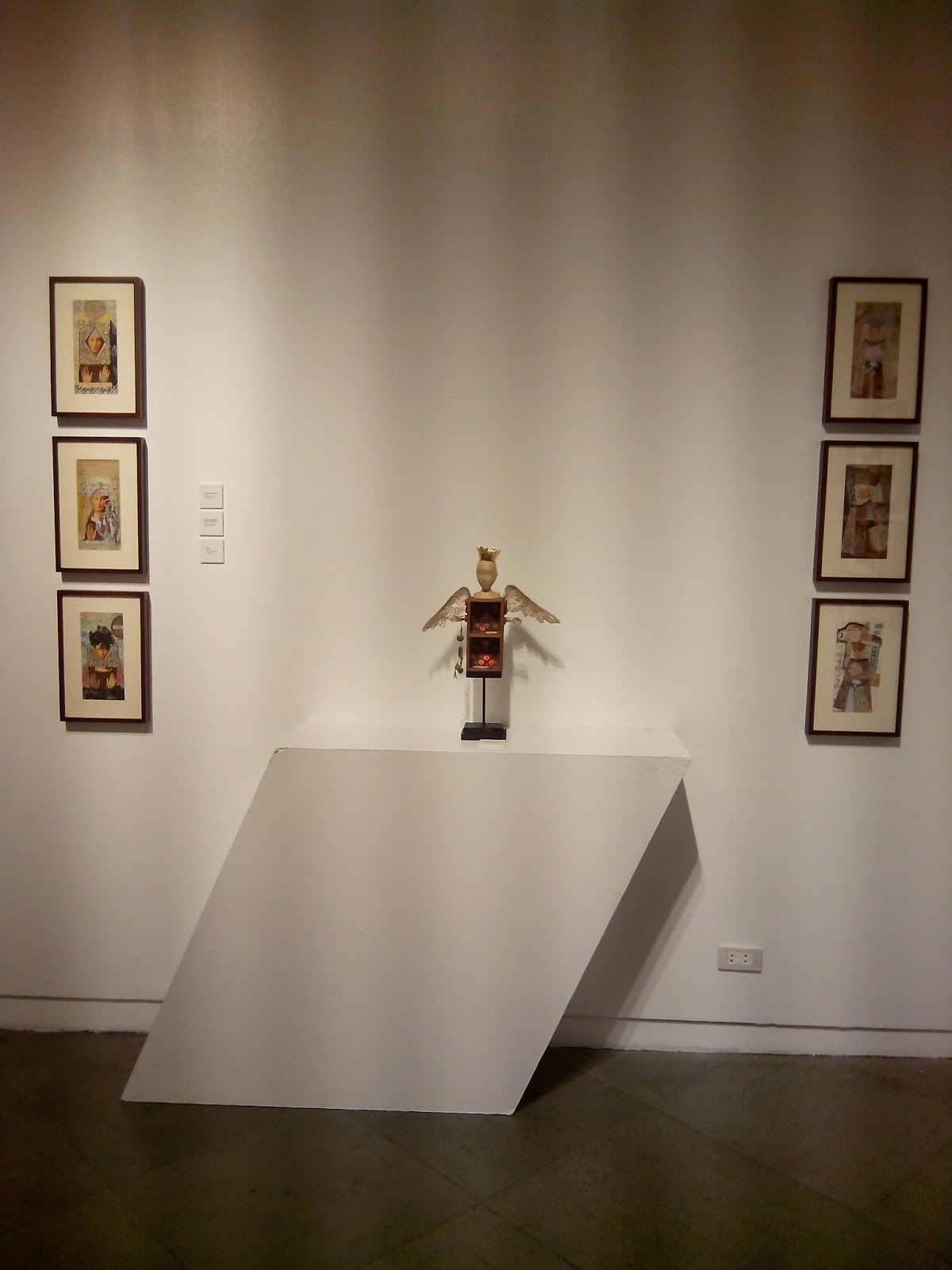
Her style is elegant and understated.  Most of the frames are small, 81/2 x 11 inch standard sizes. One can either acquire two to three frames and cluster the pieces together. But they are good enough to stand alone. She has mastered her mixing different media to a point where one can't tell how the collages are pieced together to form a whole.

Russian lady mesmerized by Nymfa's work
All the pieces were immaculate! It was hard to tell where cut pieces of paper met acrylic or oil paint. The focal point of every frame was the portrait of women, naturally. Hence, the title. I get the concept, though. Nymfa manipulates the pictures of different women: from Infantas, to Madonnas to La Gioconda, even and gives them her own spin. Perhaps, culled from her own journey of growth and maturity. she imbues the women with different characters and flavors.


She also has little installations of  winged creatures. Heads of madonnas have been embellished with head gear: crowns, tiaras and diadems. The wings were mounted on pine card boxes and the insides were  decked with different items like coins, tinsel and sundries. These are rather small and can be used  as accent pieces  for coffee tables or mantles. Interesting... very, very interesting!


Somehow, her works remind me of a Primo de Rivera but a more feminine and starkly simple one. Her pieces are different because they command a second... even third look. What he uses for scroll work, Nymfa makes up for in subtle details of torn pieces of paper and splotches of deep color. Somehow, the Ayala Museum's Artist Space is the perfect venue for Nymfa's maiden outing. The subtlety of her work matches the stark interiors of the gallery. Do I hear a husband and wife exhibit in the offing soon?


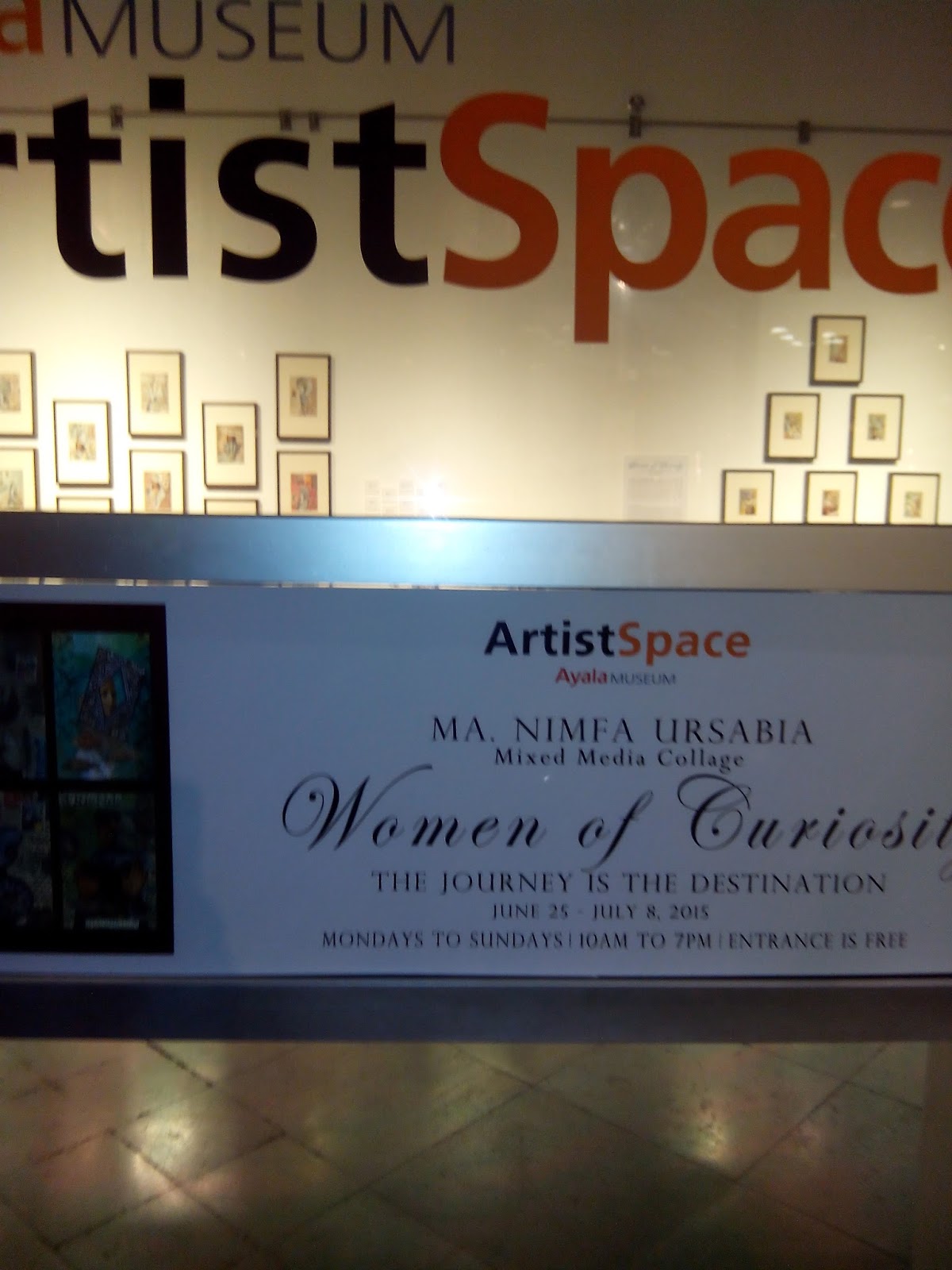
Women of Curiosity will be at the Ayala Museum from 24-June until the 8th of July.


Saturday, June 20, 2015

TRAIPSING THROUGH TAAL

St Martin de Tours

I've been to Taal countless times. And from time to time, I am assigned some local tours in the area. This  trip is quite different as I have an American family with me and a balikbayan who has made a name for herself in the medical field in the US. 

Merienda at the Gliceria Villavicencio gift house
What is so special about Taal? It has remained one of the better preserved heritage towns close to Manila. Aside from that, Taal has great historical value in the sense that it was a hotbed of  the Philippine revolution against Spain and a breeding ground for heroes and heroines at the time of our democratic awakening.
Felipe Agoncillo monument

Gliceria Villavicencio monumnent


Wedged between Taal lake and Balayan Bay, it's location is both a blessing and a curse. Volcanic eruptuons have ruined the town many times over and the waterways make it prone to flooding during torrential rains. The volcanic soil however, makes it lush and green all year long. 


Getting to Taal is so easy peasy, one doesn't even need a guide map to get there. One can hop on a bus at Cubao, Buendia or Pasay City. There are buses that have regular trips to Taal, Batangas. Or if you must drive, One can take a scenic route to Tagaytay and take the detour before reaching the junction to Nasugbu. This is a great drive that goes along the ridge of Tagaytay leading all the way to Batangas. 

Felipe Agoncillo ancestral home
The houses are very well preserved and maintained and sometimes, even much lived in. Remarkably, some homes have been opened as museums and some have been lent to adaptive re-use, which makes it interesting  spaces for convenience stores like 7-11. You can have lunch or snacks in the many coffee houses and restaurants that have sprung up there too.

St Martin de Tours, patron of the church of Taal
The main visual draw to Taal is the St. Martin de Tours basilica. The largest in all of Asia, this imposing structure was built 1575 and completely dominates the entire town as it is built on a hilltop with a commanding view of the town. Destroyed time and again by the devastation of Taal volcano's wrath, efforts to maintain and manage the church's integrity is a point of contention between well meaning advocates of the town and the parish priest and archbishop who are in hot water for their beautification efforts that undermine the church's original grandeur.

Apacible heritage house
There's a lot to do in Taal. Visiting the heritage homes alone can easily take up an entire day... a week even if you're the type who will pore over every detail of these genteel structures. I can enumerate all the lovely heritage homes one can find in Taal, but they're just too many to enumerate. you'll have to visit just to experience its old world charm. Every minute spent there is so worth it. Get yourself steeped in so much history and culture you walk out of town a changed person.

Retablo of the Caysasay church
There's also a side trip to the church of the miraculous Virgin of Caysasay. The centuries old image of the virgin, a mere 12mm tall but the miracles attributed to her are legendary. Her image is currently in the basilica for veneration and brought back to a smaller church dedicated to her where she was originally enthroned. The Caysasay church is a stone's throw away from the basilica but near it is a well where the image was said to be found intermittently when she was missing from the main altar of her church. And get this, a casay-casay, the local name for an egret was supposedly guarding her image everytime she   gets displaced. The water from the well is said to have healing powers.

The site of the Caysasay well where the image of the virgin is usually found when she's missing fro the altar

The South Luzon expressway makes for easy exit from the area. It shortens the trip by at least an hour or two depending on the traffic situation. Taal is a mere 132 km south of Manila. Go visit! You might even bring home some panutsa (sweet peanuts in caramel) or a balisong (fan knife) for that matter...

vendors selling delicacies


Wednesday, June 3, 2015

OLD MAPS AT YUCHENGCO MUSEUM

Selfie with the Yuchengco Matriarch and Patriarch behind me
I make it a  point to maximize the precious little hours in my days off work. So today, as I was able to proceed to the Department of Tourism to work on my accreditation, Ronnie Gador and Yael Fernandez decided to visit the Yuchengco Museum at RCBC Plaza along Sen. Gil J Puyat in Makati.


Special showcase of Leonor Rivera's intimate personal effects
We planned to catch the ongoing  exhibit of  Antique Maps which are rarely, if ever, publicly displayed. I  found that the collection of the Yuchengco Museum is quite impressive. We started from the fourth level which had  two sections: the Yuchengco memorabilla and the Rizaliana collection which was very interesting. 

Leonor Rivera's hair and fashion accessories


On the left side of the room, one is treated to an inside look of the Yunchengco clan's humble beginnings from a small migrant family of Chinese traders from Nanjing to their current prominence in Philippine society. The other half of the room shows Jose Rizal's "more human" side. Intimate items like the peineta of Leonor Rivera and portraits of the women who have had a lasting influence in his love-life. The love-seat from which Rizal courted Leonor Rivera is displayed in a vignette with a blow up of the parlor at the Rivera home together with sepia portraits of Rizal and his Maria Clara.

a love-seat in crewel featured in Leonor Rivera's home
It was here where all three of us had a lively discussion of the whereabouts of Josephine Bracken and the side evenets leading to her death in HongKong after the war broke out. The security guards were so amused by the stories they were hearing from the Mabuhay Guides that we chided them for listening to gossip. that was very funny!

Rizal's girlfriends sections

A flight of steps down is the featured collection of antique maps of the Philippines published during the American occupation. The collection starts with a section on the Battle of Manila Bay in 1898. Then it goes further into the areas occupied by the Americans upon arrival in the Philippines. There's also a section on the short-lived Malolos Republic. The extensive collection features rare pieces of PHIMCOS (Philippine Map Collectors Society) ergo, no photos are allowed. I managed to have a selfie at the landing where the collection is being introduced.

Map collection entrance
Another level down features contemporary pieces and installations that are just intriguing. A favorite of mine is the gown made of rope that ends in a cascade on the floor and a series of collages by Hy Dee which effectively combines minimal patterns in swathes of cool colors as pools of tranquility.

Rope Gown installation
I liked the ground floor a lot for its merry mix of the works of classical masters: Luna, Amorsolo, Hidalgo; all the way to the mavericks of modern art:  Edades, HR Ocampo, Manansala, Kiukok and Botong Francisco.  Yael and I were moved by Botong's unfinished work of the Kamote Diggers, an unfinished work at the time of his death that I had only seen in reproductions. This original frame, though done halfway, is very powerful... social realism at its finest!

Modern Art Masters wall

By the time we had reviewed the collection at the Museum, it was  nearly rush hour and it was time to go... go visit a museum! This one's worth the admission...

Botong Francisco's portrait of Dona Maria and Don Antonio Yuchengco

Thursday, May 28, 2015

ADVOCATES FOR HERITAGE PRESERVATION DOES MALOLOS

Barasoain Church, Malolos, Bulacan
One of he reasons why I do what I do is because I feel that the Philippines has so much to offer. Yes, we have such fine virgin beaches, such amazing natural wonders, such a beautiful, bountiful country which varies in topography. But we also have a rich cultural heritage brought about by centuries of colonization. 

Jose Cojuangco heritage house
Naturally, as a Mabuhay Guide, I want to showcase only the best of what our country has to offer. However, because most Filipinos who have reached the pinnacle of political and/or religious power, believe that in order to improve something it has to be made "new" again, I cringe at having to show tourists sites with commentaries beginning with... "this was formerly...." or  "this site was"...

Dr. Luis Santos heritage house
And when I became a member of the Advocates for Heritage Preservation, I realized I wasn't alone in wanting to preserve  whatever remaining vestiges we have of our glorious past. After all, my concern is that I have less and less visual points to show guests as we go around the country.

Sala of the Pink House
The recent visit of  Advocates for Heritage Preservation to Malolos was a revelation. Yeah, I've been to Malolos countless times. This was fun, though as for the first time I was going with people I had only met on Facebook. Aside from meeting new friends, I was being allowed to enter the few remaining heritage homes in Malolos, Bulacan. 

Sala of Antonio Bautista heritage house
There were more than a hundred AHP members who went on this recent trip. Indeed, the AHP is growing in number. Our ages, interests, preferences and vocations may vary but it is our love for heritage that brings us together. Thanks to Tito Encarnacion for serving as the glue that brought us together! It was also on this tour that I met the great grandson of the Sublime Paralytic, Apolinario Mabini as well... Jun Mabini is his name.

Apolinario "Jun" Mabini IV
Malolos was the seat of power of the short-lived Philippine Republic. And then, the Americans snapped the movement towards independence when they started to occupy the Philippines and impose their brand of control through the Benevolent Assimilation. So it was only normal that some patriarchs would re-locate there and some of the wealthy families living in the area lent their palatial homes to the insurrectos to further their cause.

Don Antonio Bautista heritage house
However, after we gained our independence and as time progressed, these homes have been passed on to succeeding generations who have made adjustments and lived in these homes. Some families have made it a point to retain the genteel and noble quality of their ancestral homes. The others, have succumbed to the demands of commercialism and have given way to establishments - 7/11's or thereabouts.

Enriquez heritage house in Bulakan, Bulacan
But from the featured homes that we saw, we only had admiration for how elegant and how well-maintained they have been. To have survived generations of war, pollution, mis-use and abuse they remain fine examples of the best homes money can afford at that time. As a side note, we were also treated to Bulacan's distinct  cuisine. We were given a taste of heritage recipes that the country's patriots were accustomed to. We tried delicacies specific to Malolos and Bulakan. Lunch was at a gabaldon (early American colonial) school building. And then we had merienda at the Enriquez ancestral home where there was a short drama presentation on the Katipunero struggle for independence. By the time the tour ended it was nearly five p.m. That was how much fun we had!

Katipunero flag

Wednesday, May 20, 2015

CALAGUAS CALLING

Camp site
I finally cleared up my schedule enough to be able to go to the beach this summer. It's been a while since I went out on my own for a bit of a respite. It took me two months of emailing back and forth to be able to set the date of my trip.

so fine... so white...
So right after my commitments have been cleared and the last day of performances for the Ballet Philippines Dance Recital have ended, I finally had a weekend to myself. My colleague, Ronnie, sent me the link of the tour operator he went with last year. I checked them out and sent a message that signified my intention of joining the tour on the weekend of 15-17 May. Northlink Travel and Tours made the bus arrangements for me so I wasn't worried about buses being fully booked.

1km stretch of sand
What's interesting about Northlink is that they are, so far, the only tour operators to Calaguas that are accredited by the Department of Tourism. There are other operators who do these tours as well, but I would rather spend my hard earned money on someone who has the approval of the tourism department. I was in constant touch with one of the patrtners, Romil Dolerom.

idyllic kayaking in the deep blue
I left the house with my gear in tow at 7:00 p.m. to catch the 9:00p.m. ETD from the Pasay City depot of DLTB Bus Co. bound for Daet, Camarines Norte. Was I glad that Romil had made the booking for me! There were numerous chance passengers who were waiting for their turn at hankering for empty seats and missing passengers.

my shelter under the tree
I was booked at seat #1. My seat was pretty comfortable and near an exit point. I was set! If you're the picky traveler, I'd advise you to fly to Naga and work your way back to Daet instead of a bus trip that takes 8-10 hours. I slept through most of the trip. I only woke up in time for the bus stops at various points. I was at Daet at around six in the morning. I had time for a quick breakfast before the boat ride to Calaguas Islands. Here, I was m et by another one of the organizers, Darius. He gave us ballers to identify and distinguish our group from the rest of the revelers.

Lovely afternoon  together
We were boarded onto a van and made our way back to Vinzons to the docks. It was there where I finally met Romil, who I had exchanged messages with, Pleasantries exchanged, we piled onto the boats that would take the 2 hour journey to the islands. I appreciated Romil's commentaries as the outrigger wove its way out of the estuary. His information was spot on. The area was formerly known as Tacboan, later changed to Indan and finally named after Wenceslao Vinzons, who was one of the youngest delegate to the 1935 constitutional convention and later martyred by the Japanese. Vinzons hall at UP Diliman is named in honor of this Camarines Norte native. Romil also enumerates the must see landmarks of Camarines Norte and putting great emphasis on its role in our history.

chowtime!
The sea was calm on the day of my trip so I thoroughly enjoyed the 2 hour trip on the pump-boat with 24 other total strangers. The Calaguas group is composed of at least sixteen islands but our campsite was at Tinaga Island. The white, talcum like sand was aptly named Mahabang Buhangin which is a kilometer long stretch of sand that's blindingly white in the brilliant sunlight. 

the other side
A lot of the happy campers who've visited Calaguas compare it to Boracay. As for me, it did remind me of Boracay  of twenty years back. It was a time when there were no hotels, no noisy bars, no electricity and definitely... no algae! In this instance, I had to pay 10.00/bucket to a boy who's summer job was to pump water out of a well. But I prefer to not point out the differences and similarities because Calaguas has its own charm!

Look at that sand!
I thoroughly enjoyed meeting total strangers and exchanging pleasantries with younger groups of vacationers. The Northlink staff were extremely accommodating, very efficient and also responsible guardians of the Calaguas environment. No electricity? No problem! They had their own solar panels that generated enough electricity for the acoustic  night and the fire dancer.  Free beer and unlimited punch for those who want to get buzzed by the shoreline at night. By six a.m. the next day, I went with a group of new found friends that went up the hillsides to appreciate the natural beauty of the island. Gelai, who is Romil's girl Friday led us up the hill with a red flag so we don't get lost on the trail. Still largely unspoiled, I'm glad I got to visit it while it's still largely undiscovered. It won't be long now before hotels and bed and breakfasts spring up on the island. I dread that! I heard Freddie Webb now owns two lots by the coastline and a Filipina who married into money has a 10 hectare property and that they plan to construct an airstrip right on the island. And I've only been there a fortnight...

Gelai... the Wonder woman
I had so much fun clicking away with my camera to capture the idyllic beauty of Calaguas. If there's anything I didn't like, it was the noisy group of yuppies who sang their lungs out at 2 in the morning. I normally don't mind people enjoying and getting drunk... but if you have too much fun without regard for people who are sleeping, then I take it personally! There should be some sort of police power in the area at peak season to control people who are uncontrollably noisy. Another recommendation I'd like to make is to have a docking area away from the shoreline and the beach so that bancas don't mar the picture perfect postcard quality of the sunset in Calaguas. I loved it so much I took so many shots. And lastly, separate the toilets from the shower areas so the 8 stalls constructed for rinsing off salt water don't get as congested with the growing number of visitors to the area. 

sunset 
Before I left the island, I told Romil and Darius to make sure they take good care of the island. That was a prayerful request coupled with a veiled warning. Fortunately, because of its location,  when the monsoon comes in the island gets at least eight months to regenerate and restore itself...

Mahabang Buhangin